Informed but Not Formed
Therapy in the Age of AI
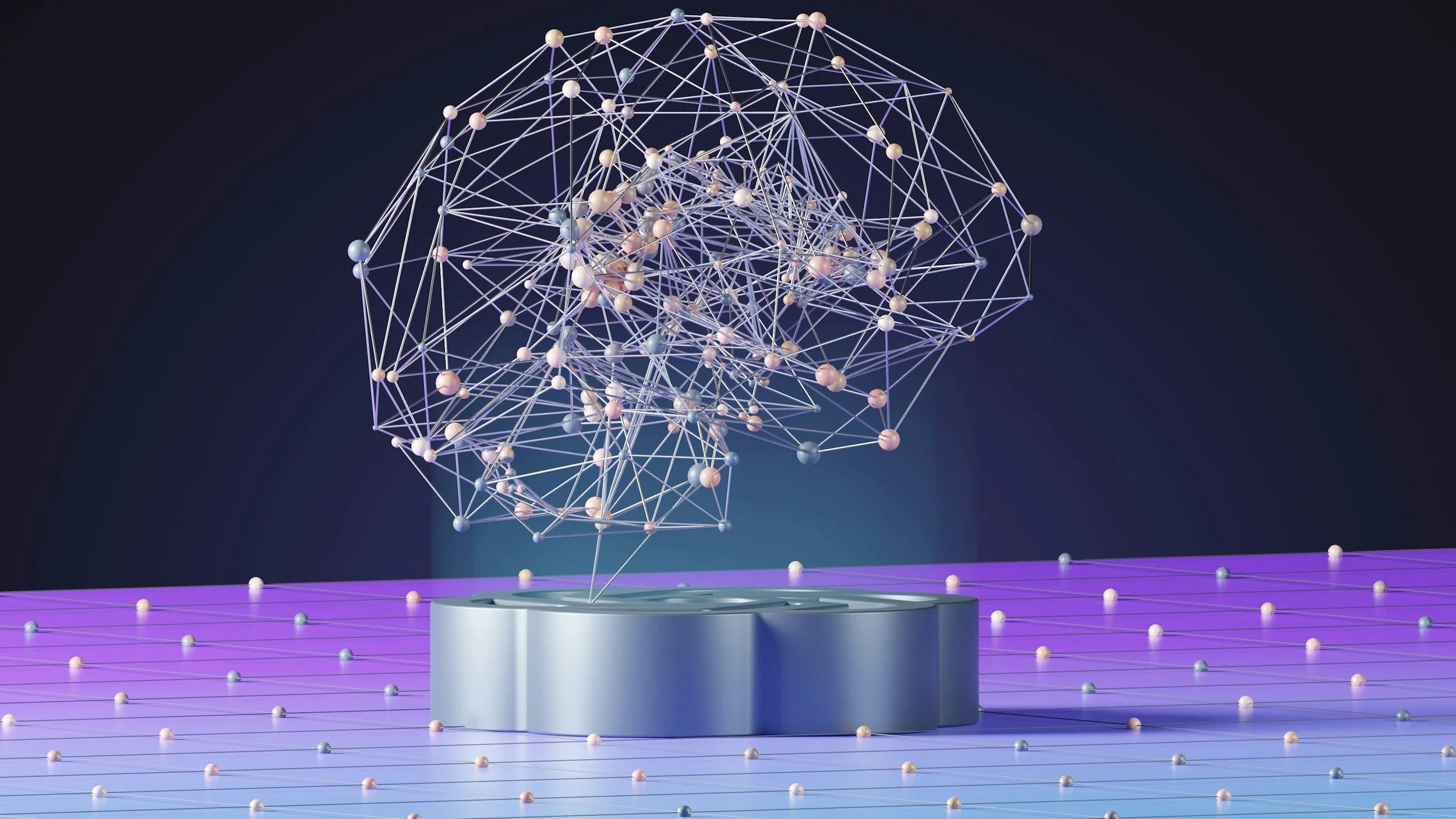
AI is everywhere right now. My goodness, a quarter of the commercials during the Superbowl either featured AI products or mentioned AI in their messaging! Honestly, it wasn’t that long ago that I first learned about Chat GPT from a few of my clients, as recent as a few months ago. I’m nearly always behind when it comes to technology. I learned it can summarize research, offer coping tools, generate reflection prompts, simulate conversation, and answer almost any question within seconds. It’s not always accurate, but neither are most people. One of my clients actually said, “I still prefer you more.” I was taken aback. I knew the big tech companies were making their mark in my field, but AI and the possible impact to my clients and my practice was new to me.
I’ve Always Loved Information
I was the kind of little girl who loved her Encyclopedia Britanica. I would sit on the floor and pull-out volume after volume just to look things up; animals, countries, psychology, random historical facts. You could also find me at the library with my head in a book or a card catalogue. There was something magical about having access to knowledge and imagination. If I had a question, I could find the answer, not to mention my parents paid me a whole 50 cent piece if I could be quiet and stop asking them so many questions. Hence, the used volumes of encyclopedias that appeared one day when I was around 7. In many ways, AI feels like an evolved version of those childhood experiences. Instead of flipping through heavy books, we type a question and receive an immediate response.
It’s astonishing. It’s efficient. It’s powerful. I don’t want to pretend that it isn’t remarkable.
Yet something feels just a little uneasy in my gut. I’ve been trying to articulate it, and I will try my best in this piece to express what I think it is.
There is a difference between access to information and access to formation. Formation is how we are shaped over time by our relationships and experiences. Information gives us facts. Formation shapes who we become. Encyclopedia Britannica gave me answers. It did not shape my attachment patterns. It did not teach me how to sit with grief. It did not help me navigate conflict. It did not hold my tears of which there were many. Information expands the mind. Relationship forms the nervous system.
AI is extraordinary in delivering information. Therapy is about transformation and transformation requires presence.
For many people, AI has become a source of support; accessible, immediate, affordable, and non-judgmental and I understand why, as a trauma-informed therapist, I hold both appreciation and concern. Therapy is not just about information. It is about formation.
Informed vs. Formed
We are living in the most informed era in human history. At any moment we can access research, podcasts, shows, documentaries, tutorials, and endless content, but there is a profound difference between being informed and being formed. AI informs. It provides data. It offers language. It can summarize trauma responses and suggest grounding techniques. It can simulate empathy.
But human relationships form us. We are formed in:
Eye contact
Tone of voice
Rupture and repair (Working through misunderstandings)
Boundaries held kindly
Conflict navigated instead of avoided
Silence shared without panic
Information can change thoughts, but formation changes attachment patterns. Information can soothe the mind momentarily. Formation rewires the nervous system from a place of danger to safety. Therapy lives in formation.
The Sacred Space Between Two People
Many people do not come to therapy simply for coping skills. They come because relationships have been confusing, painful, or unsafe. Something is happening inside of them that is powerfully uncomfortable and they may be struggling with constant anxiety or hypervigilance, panic attacks, emotional numbness, IBS or stress-related physical symptoms and trouble sleeping. These are nervous system symptoms. Trauma isn’t just memory, it’s physiology.
Individuals come to therapy to work on relationship patterns because trauma often shows up in how we attach. Some feel chronic shame or feelings of being defective. These aren’t logical, but they are formed through experience. Challenging life experiences or trauma can also create internal fragmentation that requires careful pacing to integrate like when a client loses time, feels disconnected from self or acts in ways that are out of their character. Then there is grief. Grief is something we all will experience many times throughout our lives and grief can be an activator of earlier trauma layers. Grief is not a disorder and has no timetable and although a normal part of life, it is hard work to learn to move forward. Therapy can help individuals from getting stuck and having complicated grief which can be dangerous.
People also come to therapy for some of these reasons. They struggle with:
Reading social cues
Setting boundaries
Trusting their own perceptions
Tolerating conflict or frustration
Knowing when they are over-functioning or people-pleasing
Understanding tone and subtext
These skills are not learned through information alone. They are learned in relationship.
In the therapy room, the relationship itself becomes part of the healing.
A client may over-apologize.
They may withdraw.
They may test a boundary.
They may subtly dissociate.
They may laugh when shame surfaces.
A seasoned clinician notices, not to judge but to bring awareness. I’m often saying to my clients, “Let’s get curious about that.”
“Did you notice how quickly you apologized just now?”
“I felt a shift when you said that, can we slow it down?”
“What happened inside when I held that boundary?”
This kind of attuned feedback cannot be programmed. It is intuitive. Embodied. Earned through thousands of hours of presence. AI can respond. It cannot be attuned. We cannot underestimate the Intuition of the regulated therapist, especially in trauma work, the nervous system is central.
We are tracking:
Breath changes
Micro-expressions
Signs of dissociation
Emotional incongruence
Subtle energy shifts
Sometimes we sense grief underneath anger, shame underneath humor, fear underneath defensiveness. This isn’t mystical. It’s embodied pattern recognition shaped by experience and empathy. AI can offer insight, but it cannot co-regulate a dysregulated nervous system. It cannot titrate trauma exposure in real time. It cannot repair attachment wounds through lived relational safety.
Trauma therapy is not about advice; it is about helping a nervous system feel safe enough to change. It’s important to remember that most people don’t come to therapy because they need more information. Most of my clients are intelligent, insightful, and capable of researching their symptoms. They have Googled, watched Tik Toks, read articles and have listened to podcasts. They’ve tried the coping skills on their own. They come because something is still happening inside them. They come because no matter what information they have, their nervous system won’t settle. They’re up half the night. Their relationships feel confusing. Their reactions don’t make sense, and shame lingers even when logic says it shouldn’t. Therapy is careful, paced, relational work with what is stored in the body, in memory, and in attachment patterns.
In trauma therapy, we often work directly with how memories are stored in the brain and body. We help the nervous system update experiences that feel frozen in time. We move slowly, carefully and with intention allowing past experiences to be reprocessed and integrated rather than avoided. This is not something that can be rushed or automated. It requires pacing, discernment, and attuned presence. As much as I love information, I understand that healing is not just understanding your story; it’s helping your nervous system experience it differently.
A Personal Reflection on Connection
On a personal note, I’ve watched connection shift in my own life. Fifteen years ago, I had long daily phone conversations with friends. We gathered on weekends. We processed life voice-to-voice and face to face. We cried, laughed, sat in silence without needing to fill it. There was texture to our connection. Over time, texting became the dominant form of communication. Gradually, phone calls diminished and weekend visits became rarer. Emojis replaced tone. Efficiency replaced depth.
I’ve come to understand that I’m what personality psychologists call an ambivert, someone energized by meaningful conversation, yet thoughtful and reflective. Basically, I’m in between the extrovert and introvert. Many of the people I love lean more introverted. As texting became easier and more efficient, it fit their nervous systems well. We stayed in touch, but something subtle changed. Hearing someone’s voice crack when they’re holding back tears is different than reading, “I’m fine.” Laughing together in real time is different than sending a laughing emoji. Holding someone’s hand carries something no screen can transmit. Information that happened through shared presence became less frequent.
I’ve also noticed how often we now share our beliefs and opinions through memes and short posts on social media. A meme can be clever. It can feel validating and quickly signal where we stand, but it rarely holds nuance. It doesn’t allow for tone, facial expression, or the softening that happens when two people who care about each other hold differing views face to face. When conversations about deeply held beliefs move primarily through screens, something shifts. Without human connection, without voice, without eye contact, without shared history in the room, it becomes easier to misunderstand and harder to repair. Over time, division grows and not always because we disagree, but because we stopped practicing how to disagree while staying connected. AI gives answers, memes give opinions and text gives updates, but healing, growth, and bridge building require embodied presence.
I don’t share this as criticism. Life evolves. Technology changes and we adapt, but I’ve noticed something; as our communication has moved further onto our devices, something sublet but important has shifted in our nervous systems. We have grown accustomed to interaction without presence and AI is the next step in that progression. I do worry deep in my gut about what this progression will mean. If texting reduced voice to voice connection, AI risks reducing person to person connection altogether. This is not alarmist. It’s logical.
AI gives answers, memes give opinions and text gives updates, but healing relationships, growth, and bridge building require embodied presence.
What I’m Seeing in Younger Generations
I work with many incredible young people. They are thoughtful, compassionate, and socially aware, yet the level of anxiety is stark, not because they are flawed, but because many were raised in a world where connection is increasingly screen-based. Life is centered around gaming, texting, social media, online relationships and now AI companions have entered the scene.
When advice can be accessed faster through a phone than through a conversation in the kitchen with their mom; when conflict is avoided rather than repaired, when tone, posture, and facial expressions are rarely practiced in real time, social learning opportunities shrink significantly. These are not character deficits; they are developmental gaps shaped by environment. AI did not create this, but I fear AI will deepen it.
Using AI Wisely
I am not anti-technology. I believe tools can be used responsibly. In my practice, I may encourage clients to use AI for:
Journaling prompts
Clarifying emotional language
Organizing thoughts
Drafting difficult conversations
Exploring psychoeducation
That is supplementation. Healing is experiential and relational. It involves nervous system regulation, attachment repair, and embodied presence. AI can support reflection. It cannot replace relationship in the therapy room or for that matter with family and friends.
The Loneliness Beneath It All
Despite having the ability to learn anything and everything at our fingertips, loneliness is rising. We are flooded with information yet starved for presence. No algorithm no matter how advanced can ease the ache of not being truly seen and accepted. In the therapy room among younger people the most, I’m witnessing profound loneliness. No device can replicate the exhale that happens when your nervous system feels safe with another human being. It is one of the biggest honors of my life to witness those exhales and support clients in their healing and true embodied connection with other people in their lives. We may be more informed than ever before, but we are not necessarily more formed, more attached, or more connected.
I believe until we protect spaces where human presence still matters, in families, friendships, and therapy, the loneliness will remain untouched by even the most sophisticated technology.
In the end, we do not just need answers. We need each other.
I Still Love Information. I Love Connection More.
I was a little girl who loved her Encyclopedia Britannica. I loved looking things up. I loved knowing things. I loved the feeling that if I had a question, I could find an answer somewhere. That part of me hasn’t changed. I still love learning. I still love curiousity. I still marvel at what technology can do, but I have also lived long enough to know that the most meaningful moments of my life were not built from information. They were built from the presence of someone sitting across from me, from a voice that softened when I was hurting, from laughter that filled a room and from embodied silence that didn’t feel lonely. We are living in a time where answers are everywhere. Healing still requires something slower, embodied, imperfect and human.
Yes, I still love information, but I love connection more. I hope we protect it.
This week, call someone instead of texting. Sit across from someone instead of sending a link. Choose one moment of embodied connection. Your nervous system and theirs will feel the difference.
And if you’re looking for a space where healing happens through attuned, embodied connection, I’d be honored to walk alongside you.