When It’s Not Just ADHD: Attention, Trauma, and Living in a World That Doesn’t Slow Down
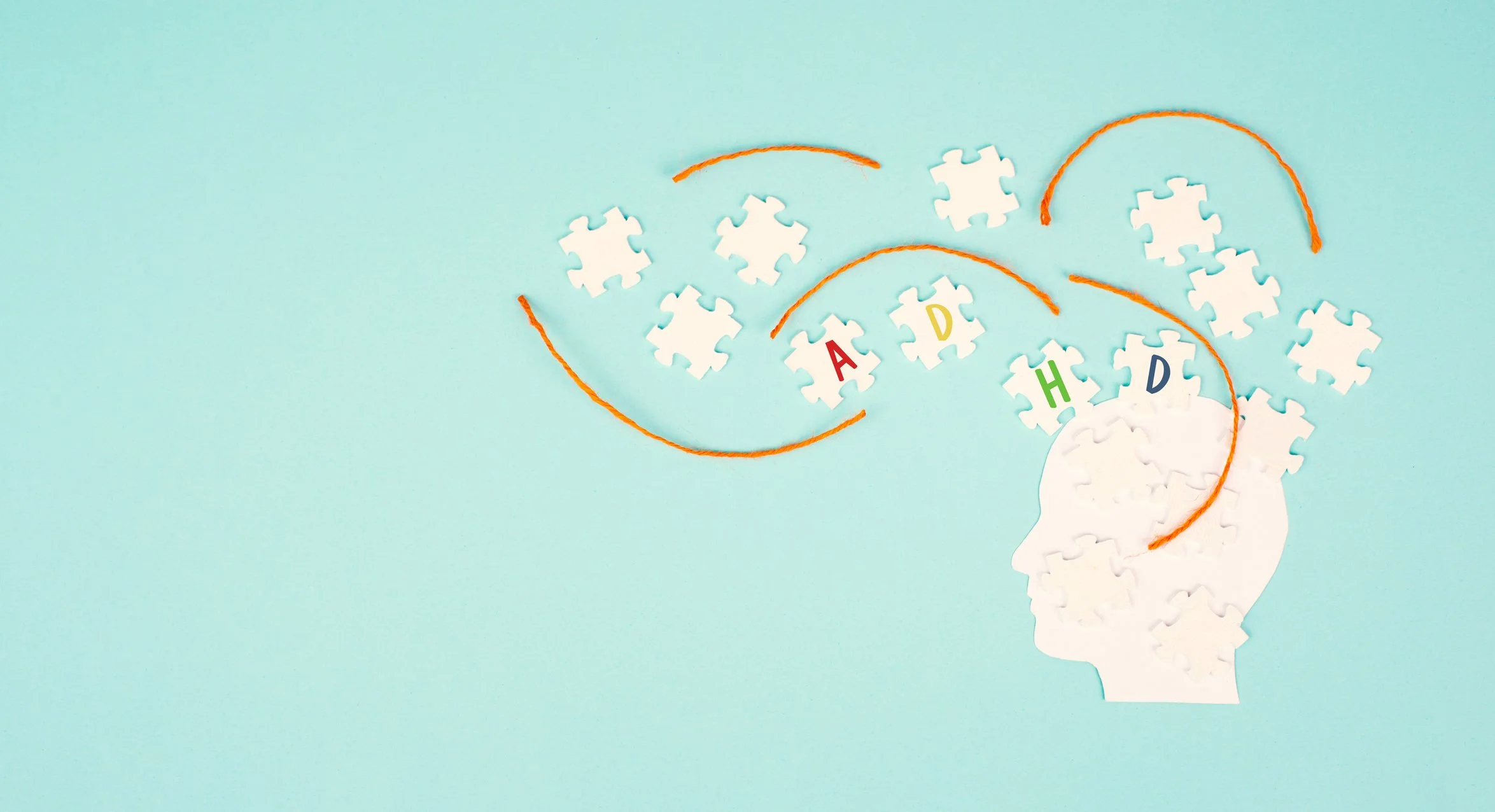
Lately, it feels like everyone is talking about ADHD and in many ways, that’s a really good thing. People are finally finding language for experiences they’ve carried for years: difficulty focusing, feeling overwhelmed, procrastination, emotional intensity and burnout. As a therapist, I find so much of this conversation helpful, and also… incomplete. We want the simple answers, but our minds and bodies and the interconnection between them and our environment are anything but simple. As much as I love the clips and videos flooding my feed and I really do, when it comes to attention, focus, and regulation, what we’re seeing on the surface is rarely the whole story.
This Is Personal for Me
This conversation is also personal for me. I grew up with trauma, and I was always a very sensitive child. That sensitivity showed up in school, but what people saw was behaviors like wiggling, talking too much and not sitting still in my seat and once something struck my funny bone, I could start giggling and I could not stop. In first grade, I was literally put in a closet several times for talking too much and giggling. As I grew older, I had difficulty with homework, even though I could sit for hours and read. If something came easily to me, I could focus, but if it felt confusing or overwhelming, my attention would disappear. I want to shout out to Mrs. Anderson, my second-grade teacher from Lake View Elementary who spent many loving hours teaching me to read during recess and being one of the kindest humans I ever met in childhood. I can still see her in my mind’s eye wearing her broad rimmed glasses and hearing her soft and gentle voice. I was falling way behind my peers, and she gave her time in such a loving way that I made reading a passion and I’ve never looked back. In the third grade when I was struggling again, I would close my eyes and think of Mrs. Anderson and I literally felt better.
No one was talking about nervous systems, trauma, or neurodiversity back in the 197o’s. There wasn’t curiosity about why, just responses to what was visible. Looking back now, I can see how many different pieces were at play: sensitivity, environment, stress, attention, and definitely underlying anxiety, not to mention what I learned later was complex Post Traumatic Stress Disorder.
I think that’s what I want people to understand; what we see on the surface is rarely the full picture.
Understanding ADHD, Beyond the Headlines
ADHD—Attention-Deficit/Hyperactivity Disorder is a neurodevelopmental condition that affects attention, impulse control, and executive functioning. Clinically, it often includes patterns like:
Difficulty sustaining attention
Distractibility
Forgetfulness
Impulsivity
Challenges with organization and follow-through
Restlessness or internal agitation
These patterns are typically present across different areas of life and often begin in childhood even if they aren’t recognized until later. ADHD is real. It has strong neurological and genetic components and at the same time, how it shows up and how it’s experienced can be deeply influenced by a person’s environment, stress levels, and life experiences.
ADHD in the Current Conversation
Right now, ADHD is being talked about more than ever, especially on social media.
In many ways, this is a beautiful shift. People are feeling seen, understood, and less alone.
And like many things that gain visibility quickly, it can also become simplified. Short-form content often highlights symptoms without context and many of those symptoms overlap with things like:
Trauma
Anxiety
Burnout
Sensory sensitivity
So, someone might recognize themselves in ADHD content and that recognition can be meaningful while still needing a deeper, more individualized understanding of what’s actually going on. As a therapist, I’m not interested in labeling people quickly or dismissing what they relate to.
I’m interested in slowing down and asking: What’s underneath this? What does this person need? What actually helps?
Trauma, Anxiety, and the Nervous System
Another important layer in this conversation is trauma, especially early childhood trauma. When a child grows up in stress or unpredictability, the nervous system adapts. That adaptation can look like:
Hypervigilance (difficulty focusing, scanning for what’s next)
Shutting down or spacing out
Impulsivity or emotional reactivity
These are not character flaws. They are intelligent survival responses, and they can look very similar to ADHD.
There is also a strong overlap between ADHD and anxiety. An anxious brain struggles to focus because it’s trying to stay safe. An overwhelmed brain struggles to focus because it’s overloaded. So often the question becomes: Is it ADHD or anxiety? The answer is… sometimes both. Is it trauma or ADHD? This answer takes more time and also can end up with a both answer.
It’s Not Just You. It’s the World
In Stolen Focus, Johann Hari explores why so many of us feel like we can’t pay attention anymore. His message is both, oh so validating, and deeply unsettling: It’s not just you. It’s the world we’re living in.
We are surrounded by constant input, notifications, and demands on our attention. We’re expected to move quickly, multitask, and stay productive often without enough rest, nourishment, or space to think deeply. Our attention is being pulled in a thousand directions, so it makes sense that focusing feels harder than it ever used to. Puzzle pieces are stacking up.
Food, Additives, and the Brain: Another Piece of the Puzzle
Another area that often comes up especially with parents of children with ADHD is food. Many families experiment with reducing sugar, artificial dyes, preservatives, or highly processed foods and notice some improvement in their child’s focus, mood, or energy. There is support for the idea that certain individuals are more sensitive to these inputs, and yet rarely has it been the whole answer. I’ve seen families make significant dietary changes and still find that their child struggles. It’s not because they’re doing anything wrong, but because attention and regulation are influenced by many factors. Food can absolutely be one supportive piece of the puzzle. Give it a try and see if it works for you, even if it helps a little, that’s great! It can be empowering to choose healthier foods. Just remember though it works best when it’s held alongside nervous system support, emotional care, environment, and when needed, medical or therapeutic support.
Looking Beyond Behavior
In my work with children, I often meet parents and teachers who are overwhelmed and just want the behaviors to stop, and I want to say this with so much compassion. I understand that. I was a young mom once, raising a child with anxiety, trauma, and very likely ADHD that was never formally treated. I know what it’s like to feel exhausted, unsure, and just wanting things to be easier for everyone. It’s hard at times to see our kids struggle or stand out in ways that can bring negative attention. This isn’t about blaming parents. It’s about widening the lens.
Behavior Is Communication.
When we focus only on stopping behaviors without getting curious about what’s underneath those behaviors, we risk missing the full picture. Children who move too fast, too slow, act impulsively, or struggle to focus are not choosing to be difficult. They are showing us something about their internal world. When we respond only to what’s visible, without understanding what’s driving it, we can unintentionally create more shame than support.
When Curiosity Gets Replaced by Control
In some family systems and environments children are expected to respond immediately, without question. Obedience is prioritized. Behavior is expected to change quickly and sometimes, when a child struggles to comply or even hesitates, it can be labeled as defiance or even something moral or spiritual, like being “disrespectful” or “sinful.” As a single mom in the 90’s struggling through the raising of a child and now as a therapist for over a decade, I have worked with many families who were taught to parent this way sometimes through generational patterns and sometimes through books or teachings that encouraged it. I want to say this gently: When we approach children this way, we can lose something incredibly important. Curiosity invites us to see the child, not just correct them. Over time, that kind of seeing helps children develop emotional regulation, resilience, and a grounded sense that they are safe and understood. When we know better, we have the potential to do better. Us older parents can influence younger parents and encourage curiosity vs. control.
Seeing the Child Behind the Behavior
When the focus becomes immediate compliance, there is very little space to ask:
What is my child or student feeling?
What is happening in their body?
What might they be overwhelmed by?
What do they actually need right now?
Children are developing human beings with nervous systems that are still forming, learning, and responding to their environments. They will be adults in a flash of an eye. When we skip over understanding and move straight to control or punishment, we risk missing the very thing that would actually help now and in the long run.
It’s hard to be a woman in her 50’s typing this. Many of us in Generation X take pride in how much we survived and sometimes that shows up as criticism toward younger generations for needing support we didn’t get or emotional safety, but surviving and thriving are not the same thing. Truth be told, we are survivors. Our parents did the best they could with what they knew at the time and most of us have the horror stories to go with it. Our children survived us as well.
I write this with an awareness of my own rigidity in parenting at times when my son was growing up in the 90’s. Much of that came from trying to raise a “good” respectful Christian child. I didn’t always trust my instincts when I could have. I trusted the parenting books given to me by well-meaning people and in that, I made mistakes. Mistakes my son and I have talked about in depth several times.
I share this because I want something different for families. I don’t want children to have to survive their childhood. I want them to thrive. I want parents to feel deeply connected to their children for who they are, not who they can or who we think they should be. I want children to feel safe enough to trust their parents with their emotions; emotions they are just exploring and learning about themselves. They do not have adult brains. I truly believe that when a child is listened to, guided with kindness, boundaries, and genuinely understood, they will grow into a respectful, regulated, and emotionally healthy adult. They can be someone who becomes a healthy partner, a thoughtful citizen and a connected parent themselves. Because when children are supported in this way, they don’t just learn how to behave, they learn how to understand themselves, regulate their emotions and move through the world with confidence and empowerment. Wounded children will need more of that along with patience and outside help.
The Role of Shame
There is another layer here that is often invisible, but incredibly powerful: Shame. Shame is one of the most significant drivers of mental health struggles. Often, it’s not just the original experience, whether it’s trauma, anxiety, depression, or attention challenges that causes the deepest wounds. It’s the shame that forms around it.
The quiet beliefs that begin to take root:
“Something is wrong with me.”
“I’m too much.”
“I’m not enough.”
“Why can’t I just do this right?”
When children are repeatedly corrected without being understood or even just heard. When their behavior is labeled without curiosity, when their struggles are seen as defiance instead of communication. Shame grows. And shame doesn’t improve behavior. It disconnects. It overwhelms the nervous system, and it makes it even harder to access focus, regulation, and follow-through. If this brings up something tender for you, and you notice shame still lingering, I want you to know you don’t have to carry that alone. Therapy can be a supportive place to begin.
A More Connected Approach
This doesn’t mean there are no boundaries. It doesn’t mean anything goes. It doesn’t mean you’re not firm. A parent or teacher can be both loving and firm with boundaries. It means we hold both: Structure and curiosity. Guidance and understanding. And we begin to replace shame with something far more healing: Compassion. When a child feels seen, not just corrected, something begins to shift. Not just in their behavior, but in their sense of safety, connection, and self. Something changes in the adult too. Something powerful to go along with that compassion, true connection.
Different Families, Different Needs
Not every family has the same capacity, resources, or values and that matters. Some families have the time and flexibility to explore therapy, routines, and environmental changes. Others are working long hours, managing multiple stressors, and trying to help their child succeed in systems that don’t easily adapt.
For some, academic success is a high priority, and they need their child to be able to function within that structure and that can lead to families seeking out medication.
A Compassionate View of Medication
I’ve personally never chosen medication for myself, in part because I didn’t grow up with medical insurance. By the time I was an adult, I found tips and techniques that helped me through my studies. I also have many clients who have and for some of them, it’s been incredibly helpful, even necessary. A mentor once shared an analogy that stayed with me: Medication can be like a prosthetic leg. If someone has lost a leg, the prosthetic isn’t about fixing who they are, it’s about helping them function in a world that requires walking.
In the same way, medication can support someone in functioning within systems that require sustained attention, structure, and output. Some people may need it long-term. Some may need it during certain seasons, like school. And some may choose not to use it at all. These choices can be made without shame.
The Reality We’re Living In
Not everyone has the ability to change their environment. We can talk about slowing down, reducing screen time, healing trauma, and regulating the nervous system and all of that matters deeply, but the reality is:
Not everyone can step out of fast-paced systems.
Not every child has access to consistent therapeutic support.
Not every family can restructure their lives around regulation.
So we do the best we can with what we have.
Living With It, Even Now
There are also things I’ve carried with me into adulthood. I’ve always had difficulty reading instruction booklets. Sitting still can be hard. I fidget a lot! And even after all the work I’ve done, this is still something I navigate. Not as something that’s wrong, but as something I’ve learned to understand and work with.
Meditation helps. Slowing down helps. Focusing on one task helps, but that’s not always realistic in the world we’re living in. What helps me the most is nature. Being outside, away from the noise, is where I feel my system settle and my mind come back into focus. It feels like remembering a rhythm that exists underneath all the urgency. Take time to find what helps you.
Practical Supports in a Busy World
Alongside deeper work, there are also simple, practical supports that can make a meaningful difference.
Taking breaks from social media
Reducing multitasking when possible
Building focus muscles through Mindfulness
Creating gentle structure
Using timers
Using visual supports
Sometimes it looks like having baskets around the house to gently “catch” things so your space can still feel calm and put together, even when life feels full or using zones. These aren’t about perfection. They’re about reducing friction, so your energy can go toward what matters.
Your Brain Is Not Broken
I want to be very clear about something: There is nothing wrong with your brain.
What I see, over and over again, are nervous systems that have adapted beautifully and intelligently to the environments they’ve been in. Whether it’s ADHD, anxiety, trauma, or some combination these patterns make sense in context. The work isn’t about fixing yourself. It’s about understanding yourself, supporting your nervous system, and creating conditions where you can feel more like yourself.
A More Compassionate Way Forward
If I could wish for something, it would be this: A world where we slow down. Where children are given more space to be human. Where nervous systems are understood, not judged. Where healing and therapy is valued. A world where we put down our phones more and spend more time outside making space for rest, repair, and connection.
But until then:
We meet ourselves where we are. We meet our children where they are. We come back, again and again, to something deeper within us, a steadiness that isn’t rushed, a rhythm that isn’t forced, a place that quietly reminds us we were never broken to begin with.