

Notes from the Heart
by Tina Roberts, LICSW

When I dreamed up Notes from the Heart, I wanted it to be more than just a collection of articles on mental health. I wanted it to feel like sitting down over tea with someone who truly listens, where the conversation is honest, compassionate, and unhurried. I thought of calling it Tea with Tina. Most likely as you read this, I do have a hot cup of tea close by. Take a moment if you will and get your own hot and soothing beverage.
Notes from the Heart fit beautifully because the work I do comes straight from my heart. In truth, this space was born from the quiet moments after sessions are over. Those moments when thoughts, feelings and ideas whisper into my heart truths about this messy life we live and the resilience of the human spirit.
In my work as a therapist, I’ve had the privilege of holding space for people in some of their most vulnerable moments. I’ve witnessed the courage it takes to face trauma, the raw ache of grief, and the quiet bravery of showing up for yourself even when it’s hard. Therapy is hard, but we can do hard things. I’ve also seen how healing happens in the small moments within the stories we tell, in the gentle truths we uncover, and in the way we learn to offer ourselves grace.
This blog is an extension of that work. The work with clients and the work within myself. Here, you’ll find reflections on trauma, grief, anxiety, and self-discovery. I’ll share practical tools you can use, compassionate insights to help you feel less alone, and sometimes even personal stories from my own healing journey.
While I can’t offer therapy through these posts, I can offer something I believe is just as important; connection, understanding, and hope.
Whether you are navigating your own healing, supporting a loved one, or working as a therapist yourself, my hope is that these words will meet you exactly where you are. If you take away just one thing from Notes from the Heart, let it be this; you are not broken. You are human. Healing is always possible, even if the path is slow, winding and imperfect. So, welcome. I’m glad you’re here. Let’s walk this path together – one note from the heart at a time.
If something you read here resonates, I’d love you to explore more. I offer therapy for individuals of all ages, other therapists and healing professionals. Together, we can create a safe, compassionate space for your healing journey.
How I Show Up as a Therapist for LGBTQ+ Clients and for Parents Who are Struggling
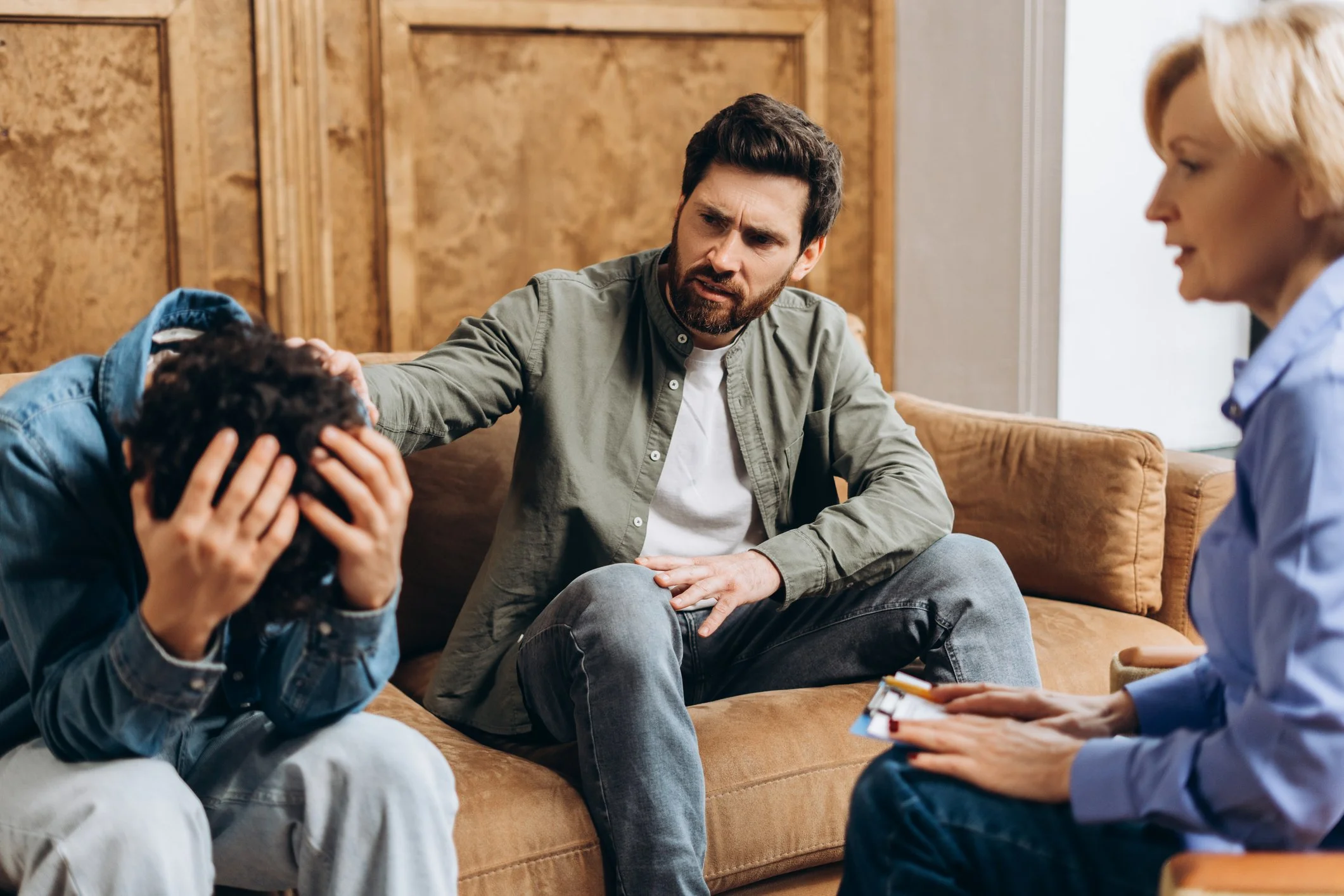
I want to speak openly about something I’ve been wrestling with as both a therapist and a Christian, neutrality.
Over the years, I’ve worked with many clients who are part of the LGBTQ+ community, as well as parents who are trying to understand and respond to a child who has come out. Sometimes these worlds overlap. Sometimes they collide. And sometimes they leave therapists feeling caught in the middle, trying to be “neutral” in situations where harm is quietly happening. The idea of trying to be supportive to two differing perspectives in the therapy room has almost always called for neutrality.
Recently, I had an experience that unsettled me deeply and clarified something I’ve been holding for some time: neutrality is not always ethical. As a therapist, I am guided by professional ethics and lived experience, and there are moments when silence or “neutrality” can unintentionally reinforce harm. Practicing as a therapist and also being known as a Christian in a rural community, I’m aware that people may make assumptions about what I believe and may seek me out expecting alignment with more fundamentalist views. For the sake of transparency and safety, it feels important to be clear about the values that guide my work.
Over time, my views have changed, not because I abandoned my faith, but because as my faith deepened, I chose to listen more openly to those around me. Sitting with clients, walking alongside family members, and engaging with research and medical science has expanded my understanding of human identity, suffering and resilience. I began to notice where fundamentalist Cristian interpretations caused real harm, shame, fear and disconnection rather than healing. As a clinician, I am ethically bound to do no harm. And as a person who strives to live out the values of Christ, love, humility, mercy and care, I realized I needed to step away from beliefs that did not align with those values.
Growth for me, has meant choosing compassion and relationships over rigidity.
How I show up for LGBTQ+ clients
First and foremost, I want to be clear on what I believe and what I know professionally:
Sexual orientation and gender identity are not mental health disorders. They are not pathologies. They are not problems to be solved.
· Sexual orientation is not a choice.
· It is understood as a complex interplay of biology, neurology, and development.
· Major medical and psychological organizations agree on this.
· Attempts to change it are ineffective and harmful and can be fatal.
Conversion “therapy” is not only ineffective at changing orientation or identity, but also consistently linked with worse mental health outcomes, particularly increased suicidal ideation and suicide attempts. Research from the Family Acceptance Project found that LGBTQ+ young people whose parents actively tried to change their sexual orientation had suicide attempt rates of 48%, more than double the rate (22%) for those who did not experience such efforts. When professional conversion efforts were present, suicide attempts nearly tripled to 63%.
As a therapist I have often treated LGBTQ+ individuals who are distressed around body incongruence, social rejections, discrimination and feelings of not being safe in their schools, churches and homes. Any diagnosis of gender dysphoria is about the emotional distress a person experiences.
For LGBTQ+ clients, therapy should be a place of emotional safety, not scrutiny. A place where identity does not need to be defended, justified, or explained away. For some, therapy is the first place where they are accepted for who they are. I don’t take that lightly. Many LGBTQ+ individuals come to therapy already carrying layers of shame, fear of rejection, deep wounds of not being accepted by their family. Some have the added layer of religious harm or trauma.
My role is not to add to that burden, but to help reduce it.
In my work, this means:
Prioritizing emotional and psychological safety.
Supporting healthy identity development.
Addressing anxiety, depression, trauma, or relational stress without framing identity as the cause.
Therapy should help people feel more whole, not more divided.
In practice, this means”
I don’t ask clients to justify or explain their identity.
I don’t challenge or debate who they are. They define who they are.
I don’t frame their sexuality or gender as the source of their symptoms.
I don’t assume their family, faith background, or community is affirming or hostile.
Instead, I create space where:
The client controls how much they share and when.
Language is respectful and responsive.
Curiosity is directed toward their experience, not their identity itself.
For example, if a client presents with anxiety or depression, the work focuses on what they are experiencing internally, not on “why” they are LGBTQ +. If identity-related stress is present, it’s explored as a response to the pressure they are feeling externally, as well as rejection and fear they are experiencing, not as a personal flaw. Psychological and emotional safety means the client can exhale instead of brace.
What supporting healthy identity development looks like.
Supporting healthy identity development does not mean pushing someone toward a label, outcome or conclusion.
It means supporting integration, self-trust, and coherence however long that takes.
A healthy example:
A young adult client may be questioning aspects of their sexual orientation or gender identity and feel pressure from family, faith or culture to “figure it out” quickly or correctly."
Healthy support looks like:
Allowing internal emotional exploration without urgency.
Validating uncertainty as a normal developmental experience.
Helping the client notice what feels authentic versus what feels imposed.
Separating internal values from external expectations.
Rather than asking, “What are you, really?” Which really does happen to young people and that just breaks my heart. The work sounds more like:
“When and where do you feel safe being yourself?”
“What feels true for you right now?”
“Where do you feel tension, and where do you feel relief?”
“What parts of you feel most like yourself?”
“What do you feel makes you, you?”
Healthy identity development isn’t about defining someone.
It’s about helping them belong to themselves.
Supporting parents when values and beliefs are challenged.
I also work with parents, including Christian parents, who are struggling when a child comes out. I want to say this clearly: parents are allowed to have their feelings. I hold deep empathy for parents, and just as I have sat in hard and tender places with young people, I have also sat in dark and painful places with parents. Most parents are not motivated by rejection; they are scared. They worry about what life will be like for their child, how others might treat them, and how much their world may change. Parents want safety for their children. They want their children to be happy, and the reality is that the world can be harsh for LGBTQ+ individuals, and many parents are simply trying to protect their child from suffering.
There is also grief. Parents carry hopes, expectations, and dreams for their children, and sometimes what they are facing does not fit those imagined futures. Letting go of certain dreams can be deeply painful. Yet grief does not mean failure, and it does not mean love is absent. With support, parents can learn to release what no longer fits and begin to dream new, healthier, and more life-giving dreams for their child and for themselves. That process, while difficult, is possible. I’m happy to report that I’ve seen some beautiful outcomes.
Holding Parents with Compassion and Drawing Ethical Boundaries
Shock, grief, confusion, fear, and internal conflict do not make someone a bad parent. They make someone human. I care deeply about supporting parents as they navigate these emotions and move toward a closer, more authentic relationship with their child or adolescent.
At the same time, there are ethical boundaries in therapy that matter to me. I do not support placing pressure on a child or adolescent to carry messages, beliefs, or expectations that are harmful to their emotional or psychological well-being. Therapy must draw a clear line between processing a parent’s emotion and placing those emotions on a child. A child or adolescent should never be asked to carry the weight of a parent’s unresolved conflict around values, beliefs, or identity.
When I support parents in this situation, the focus is on:
Helping them regulate and process their emotions in appropriate spaces, so their child does not have to.
Processing fear, grief, internal conflict with compassion and honesty without blaming their child.
Helping parents prioritize safety, dignity, and developmental needs and move from fear-based reactions toward connection, understanding and care.
Learning how to preserve a safe, loving relationship.
Understanding the mental health risks associated with rejection or shaming their child.
Therapy can support parents without harming their children. That boundary matters.
When Emotional Weight Gets Placed on a Child.
Sometimes harm doesn’t come from intent, but from unprocessed emotions. Below are examples of ways parents often unintentionally may place emotional or psychological weight on a child or adolescent that therapy works to prevent.
Please note that these examples are not about blame. I share them for awareness.
Asking a child to manage a parent’s emotions, such as saying:
“This is breaking my heart.”
I don’t know how I’ll survive this.”
“You’re tearing our family apart.”
Requesting secrecy or emotional caretaking,
“Don’t tell anyone, you’ll ruin our reputation.”
“I can’t handle this, so you need to be patient with me.”
Using love or acceptance as conditional, even subtly:
“I love you, but I can’t support this.”
“We’ll see how this goes.”
“I’ll love you when you turn away from this.”
“I can’t support you until you turn away from this.”
“We’ll see what God does.”
Asking the child to delay or suppress identity for the parent’s comfort:
“Can you just wait?”
“Do you have to talk about this right now?”
“You’re too young to know. We will deal with this when you’re older.”
Using fear of hell or eternal punishment
“I’m afraid you’re going to hell.”
“This puts your soul in danger.”
“I can’t stand the thought of you being separated from God forever.”
Framing identity as spiritual failure or deception
“This isn’t who God made you to be.”
“You’re being deceived.”
“If your faith were stronger, this wouldn’t be happening.”
Positioning the child as responsible for a parent’s faith conflict, including statements like:
“You’re testing my beliefs.”
“This puts me in a terrible position with God.”
“I’ll love you when you turn away from this.”
“I can’t support you until you turn away from this.”
“We’ll see what God does.”
Using therapy to reinforce a message that increases shame or fear, such as expecting a therapist to:
Convince the child they are confused.
Frame identity as a problem to be corrected.
Asking a therapist to convince a child or adolescent that they are sinful.
Emphasizing judgement or eternal consequences over emotional safety
Why Therapy Draws a Boundary Here
Children and adolescents are still developing emotionally, neurologically and spiritually. Asking them to carry a parent’s unresolved grief, fear, or belief conflict places them in an adult emotional role they are not equipped to hold.
In therapy, the focus is on helping parents process their emotions in appropriate spaces, so children do not have to absorb them. This protects the parent-child relationship and supports long-term trust, safety, and connection. Again, I want to reiterate parents are not wrong for having strong feelings. Fear, grief, confusion, and internal conflict are human responses. Therapy exists to support parents through those emotions without placing them on their child. With support, it is possible to move from fear to understanding and from conflict to connection.
Why These Messages Cause Harm
Being told, explicitly or implicitly that their identity places them at risk of eternal punishment can lead to chronic fear, shame, anxiety, depression and spiritual harm or even trauma. Over time, these messages damage trust and can push a young person away, not only from their parents, but from faith itself.
Holding Faith While Protecting Relationship
Parents do not have to abandon their faith or deeply held beliefs in order to love their child well. Many parents fear that honoring or respecting their child will mean compromising their beliefs. In practice, how a parent responds often matters more than what they believe.
Faith-honoring responses that protect relationships may include:
“I love you. Nothing about this changes that.”
“I’m still working through my beliefs, and that’s mine to carry, not yours.”
“You don’t have to protect me from the truth.”
“I don’t have all the answers, but I’m willing to keep listening.”
Maintaining relationship does not require agreement.
It requires love, humility, safety, and presence.
For many families, choosing connection over control becomes the bridge that keeps both relationship and faith, possible over time. Yes, some parents over time may change their views and some do not. What is most important is the relationship; the love and safety provided to all involved.
The limits of “ethical neutrality”
For a long time, I worked in community mental health. I saw all kinds of individuals and when I saw parents with fundamentalist views struggling with this situation, I believed that ethical neutrality was the right thing. It was the way so many counselors and therapists are trained and how not to rock the boat. It was thought that we should avoid taking sides or holding strong positions. I still believe that what I think and feel in the therapy room is irrelevant most of the time, because it’s not about me. Over time though, I’ve learned that neutrality has limits. Working with the LGBTQ+ community is one of those times.
We are not neutral about abuse.
We are not neutral about racism.
We are not neutral about domestic violence.
And I don’t believe we should be neutral when a young person’s identity is being framed as sinful, broken, or disordered in ways that put their mental health at risk. Not being neutral doesn’t mean we impose our own beliefs. It means we do not participate in harm.
I don’t mediate theology in the therapy room. I don’t act as an authority on theology. My role is not to determine who is right or wrong in matters of theology or another person’s religious beliefs.
My role is to protect emotional and psychological well-being, especially when minors are involved.
Shaming children will have long term effects
that hurting and scared parents can’t always see in the moment.
I don’t claim to be an expert in LGBTQ+ identity, but I am deeply experienced in working with trauma. In my private practice, I’ve worked with many individuals whose trauma is tied not to their identity itself, but to how it was received, particularly within families and faith communities. The coming-out-process, and the responses that follow, can leave lasting emotional wounds. When a person’s core identity is met with rejection or conditional love, it can deeply disrupt their sense of belonging and safety, often showing up years later in therapy.
Holding faith and ethics together
I’ve been a Christian for 37 years, but I didn’t grow up Christian. My views on sexuality and faith weren’t formed in isolation. I knew gay and lesbian people long before these conversations were politicized, and long before I was a therapist. I’ve watched many live healthy, loving, grounded lives. Over the years, I’ve also been part of fundamentalist Christian spaces where fear and assumptions shaped how people talked about sexuality, often in ways that didn’t match what I was seeing in real relationships. My faith has been shaped by Scripture, study, lived experience, and listening.
I no longer understand love as something that requires separating people from who they are.
I hold my faith with humility and continue to wrestle with it, trusting that faith does not require certainty to be sincere. In fact, uncertainty has become part of my faith. What remains clear is this; I will never use faith as a tool of shame, control, or harm, especially toward children and adolescents who are seeking safety, understanding, and belonging.
What this means for my practice
I am available to:
LGBTQ+ clients seeking supportive, affirming care
Parents who want help processing their own reactions in ways that protect their child
Families who are working toward safety, communication, and relational repair
I am not able to:
Provide therapy that treats sexual orientation or gender identity as a disorder
Use scripture or doctrine to correct or shame a client
Participate in treatment that prioritizes belief enforcement over emotional safety
This stance is not about exclusion. It is about ethics, care, and responsibility.
If you’re navigating these questions, whether as an LGBTQ+ individual, a parent, or someone caught between faith and compassion — you are not alone. You deserve support that does not require you to disappear parts of yourself in order to heal.
Untangling Food, Trauma, and the Body: A Compassionate Path to Healing
Many trauma survivors struggle with food sensitivities, gut issues, and complicated eating patterns such as disordered eating and more severely eating disorders. This compassionate guide explains how trauma shapes the body and how healing begins.
If eating has ever felt confusing, overwhelming, or tangled with past experiences, this piece will help you understand your body with more compassion and clarity.
For many people food is comfort, connection and tradition.
But for others, especially trauma survivors’, food can be one of the most emotionally complicated parts of life.
As a trauma therapist, I often see clients who struggle with eating patterns that don’t make logical sense but make perfect nervous-system sense. When your earliest experiences with food were tied to fear, shame, control or unpredictability, your body learns that eating is not safe. It carries that learning into adulthood. This is food trauma. And it’s far more common than we talk about.
“Trust me, I’ve tried to talk about this outside the therapy room with friends, family, and even within my own cultural circles. You guessed it, the conversation almost always shifts to weight, diets, or ‘trying harder.’ And to be honest, I’ve lived in that mindset far too often myself. I’ve blamed myself for not losing weight fast enough or regaining it, for struggling with digestion, or for having sensitivities I couldn’t explain. I didn’t realize for a long time that trauma was part of the picture, that my body wasn’t failing, it was protecting me. So many of us have been taught to view food struggles as a matter of willpower when in reality they’re often a reflection of what we’ve lived through.”
Growing Up When Food Came With Rules, Scarcity, and Fear
I grew up in a time when many households required kids to “clean their plate,” regardless of hunger cues. Adults decided the portions, and children were expected to eat without questioning preferences, texture sensitivities or fullness.
We were also very poor. Food wasn’t always predictable, and “being picky” wasn’t allowed. I had genuine texture struggles, but in a survival focused household, those needs weren’t understood.
On top of that, my stepfather battled mental health and addiction challenges. In that environment, mealtimes weren’t always safe or predictable. Sometimes compliance wasn’t just about finishing dinner, it was about staying protected. The table became a place of tension rather than nourishment for me. I share this gently, without graphic details, because so many people carry similar stories in silence. Those stories matter. You are not alone.
What Is Food Trauma?
Food trauma happens when eating is paired with moments of:
anger or violence in the home
humiliation or criticism during meals
forced eating or punishment involving food
being shamed for weight, appetite, or body size
sensory overwhelm without support
food scarcity, neglect, or unpredictable access to meals
being pressured to “clean your plate,” ignore fullness, or override hunger cues
chaotic or high-conflict mealtimes
a lack of safety during meals
For a child, food is supposed to be safe and nurturing. When it becomes a setting for harm, the body learns:
“Eating is dangerous. My needs are dangerous and unimportant. Nourishment is dangerous.”
These beliefs are stored not just in memory but in the nervous system. They can re-emerge decades later, even when the threat is gone or they may be a familiar daily companion.
How Food Trauma Shows Up Later in Life
You may recognize:
anxiety around eating
having “safe foods”
losing appetite under stress
bingeing or “emotional eating”
avoiding mealtimes
texture sensitivities
stomach pain, nausea, or reflux during meals
eating too quickly
guilt or shame after eating
struggling during holidays or food-centered events
These are not personal failures. These are protective responses shaped by earlier experiences.
Food, Trauma, and Hyp0-arousal: Why We Turn to Eating When We’re “Below” Our Window of Tolerance
Food isn’t only connected to trauma from childhood or mealtime experiences; it also becomes a way many survivors cope with the nervous system dropping into hypo-arousal.
Simply stated, hypo-arousal is a trauma state where the body and brain shut down to protect you. It happens when the nervous system becomes overwhelmed and drops “below” the Window of Tolerance.
In hypo-arousal, people often feel:
numb
disconnected
exhausted
slowed down
foggy
unable to think clearly
emotionally flat or far away
like they’re “checking out”
low-energy but also restless
empty or hollow inside
And here’s where food comes in.
Using Food to Soothe the Shutdown State
When someone hits hypo-arousal, eating especially comforting foods can temporarily:
bring sensation back into the body providing a momentary reconnection.
create a feeling of being grounded
provide eomotional warmth and internal connection
give a burst of glucose, a short-lived “return to life”
counteract numbness
I once heard it stated like this. “Food becomes a tool to climb out of the emotional basement.” If you know who said this let me know. It’s spot on!
This isn’t weakness or a lack of discipline. It is a brilliant survival adaptation from a nervous system that at one point, didn’t have very many tools in its toolbox. For trauma survivors, especially those raised in environments where feelings weren’t supported, food became a form of self-rescue long before there was language or understanding around what was happening in their body. This may even be the first moment you are learning this and that is why I’m writing about it.
Using Food to Numb: When Eating Helps Us Escape Overwhelm
Just as some people use food to bring themselves up out of hypo-arousal (shutdown), many trauma survivors use food to bring themselves down from hyperarousal, the activated, flooded, overwhelmed state often known as Fight or Flight.
Hyperarousal feels like:
anxiety
racing thoughts
tension
fear or panic
irritability
restlessness
emotional intensity
feeling “too much, too fast”
being overstimulated or on edge
When the nervous system is overloaded, the body looks for something that will quickly:
quiet the mind
soften the intensity
create heaviness
slow everything down
distract from emotional pain
bring temporary comfort or warmth
interrupt spiraling thoughts
For many people, food becomes that tool. Food, especially sweet, fatty, creamy or heavy foods can create a momentary sense of:
numbing
quiet
escape
emotional “padding”
distance from distress
shutting off overwhelming sensations
This isn’t a failure of willpower. It’s survival. It’s the body saying: “This is too much. I need to shut down the noise.” Trauma survivors often grow up without safe co-regulation or emotional support, so the nervous system learns to cope in the fastest available way.
I’ve used food in different ways throughout my life, long before I understood the nervous system or trauma responses. As a child, I remember hiding ice cream in a tall glass of milk and quietly slipping away to my room with it. That wasn’t about hunger. It was about creating a moment of comfort in an environment that often felt tense and unpredictable, especially for a highly sensitive child like me. And later in adulthood, during my divorce and the death of my mom, after the initial inability to eat anything, I “treated” myself to comforting meals. I can see now that they weren’t indulgences. They were attempts to wake myself up from the numbness or reward myself for simply getting through the day. They were my nervous system’s best efforts at regulation before I had language for it.
These patterns make so much sense now. Food was never the problem, it was the tool I had at the time to cope, survive, and self-soothe.
Why the Holidays Can Be Triggering
The holidays can bring old family roles, pressure to eat certain foods, comments about weight or appearance and even overstimulating environments. We can have emotional memories tied to food and expectations to act “fine” or “festive”. Be kind to yourself. Returning to the places where food or even the environment once felt unsafe is hard for some. Even joyful celebrations can activate a body’s memory.
If your relationship with food becomes harder this time of year, you’re not “backsliding.” Your body is remembering.
A Gentle Note About Holiday Meals
If you live with food trauma, disordered eating, food sensitivities, or gut challenges, holiday meals can bring an added layer of stress or vulnerability. The mix of expectations, rich foods, comments about eating, and the sensory or emotional weight of family gatherings can make this season especially overwhelming. If this is true for you, please know there is nothing wrong with you. Your body is doing its best to protect you. You’re allowed to honor what feels safe, choose foods that support your well-being, and create boundaries that help you stay grounded. Healing is not about performing at the holiday table. It’s about listening gently to yourself.
If You’re struggling With Disordered Eating or an Eating Disorder, You’re Not Alone
Food trauma can evolve into disordered eating patterns like restricting, “emotional eating,” avoiding meals, or using food to regulate your emotions (cope). Many people live with these patterns for years without realizing they’re trauma related.
Eating disorders are not willpower. They are complex nervous-system responses shaped by trauma, stress, shame and survival. Eating disorders are serious, sometimes fatal illnesses, not lifestyle choices or phases. According to a common statistic used by advocacy groups, about 10,200 deaths each year in the U.S. are directly attributed to eating disorders. That’s roughly one death every 52 minutes. ANAD-Eating-Disorders-Fact-Sheet-v2.pdf
Common Eating Disorders Include:
Anorexia Nervosa
Bulimia Nervosa
Binge Eating Disorder
ARFID (often connected to sensory issues or trauma)
OFSED (significant symptoms that don’t fit neatly into one category)
This is important. You don’t have to meet criteria for an eating disorder for your personal struggle to matter.
When to Reach Out for Help
It may be time for support if:
eating feels overwhelming
you ignore hunger cues or skip meals
guilt or panic shows up around food
textures, smells, or certain foods cause anxiety
holidays feel emotionally loaded
you’re hiding eating habits
you have chronic stomach issues without clear medical explanation
you use food to regulate.
You deserve support long before things are “sever.”
Where to Get Support
Trauma-informed Therapy
EMDR, CBT, ACT, Lifespan Integration, somatic work, and parts work can help untangle food-related trauma and rebuild safety. If you’re in Washington State, I offer this type of support and know others that do too.
Your Primary Care Provider
They can assess medical concerns and refer to specialists if needed. This is not a step to miss. If I’m working with a client that has a diagnoseable eating disorder, I contract with the client to have their physician on board.
Eating-Disorder Informed Dietitians
Look for those trained in intuitive eating, HAES, or trauma-informed nutrition.
National Resources
NEDA (National Eating Disorders Association): Call or text 988 and request the eating disorder line
988 Suicide & Crisis Lifeline for immediate support
Local or Online Support Groups
Body-neutral and trauma sensitive spaces can be healing.
Can Trauma Cause Food Sensitivities and Gut problems? Research Says Yes.
Because of my own struggles with digestion, food intolerances, autoimmune symptoms, and sensory sensitivities, I became deeply curious about why my body responded to food the way it did. What I found, both in research and in my clients is that food sensitivities often have roots that go far beyond the food itself.
Trauma doesn’t just live in the mind. It lives in the nervous system, immune system, and gut.
One of the clearest explanations comes from the ACE Study (Adverse Childhood Experiences), the largest and most important study ever conducted on childhood trauma. About the CDC-Kaiser ACE Study |Violence Prevention|Injury Center|CDC Adverse Childhood Experience Questionnaire for Adults
The ACE Study found that early traumatic experiences don’t just affect emotional health. They affect immune function, gut health, metabolism, stress hormones, inflammation, and long-term physical resiliency.
This means that many adults digestive problems; IBS, inflammation, food sensitivities, and autoimmune symptoms are not random. They often reflect how the body adapted during unsafe or overwhelming childhood environments. Trauma researchers, gastroenterologists, functional medicine and integrative doctors are all pointing toward the same conclusion:
What I understand is that trauma reshapes the gut. The gut reshapes health. Food sensitivities can be learned in the body long before we know what they are.
If you have a high ACE score or are noticing chronic health concerns, the most important step is to approach yourself with curiosity rather than fear. Trauma informed therapy, a well-versed doctor, nervous-system regulation, supportive relationships, and nutrition that honors your body can all play a profound role in reducing symptoms and improving long-term health. In my own life and in this current season of healing, I’m learning how caring for my nervous system, gut health, and emotional well-being shows just how interconnected and resilient the body truly is.
A Note on Weight, Health, and Compassion.
We live in a culture that talks endlessly about weight, losing it, controlling it, fearing it. Diet culture teaches us that thinness equals worth, and that our value is tied to our appearance. But healing from trauma, improving gut health, and creating a peaceful relationship with food are far more complex than a number on a scale. As both a therapist and someone on my own health journey, I’ve worked at gaining a more balanced and compassionate view:
Weight is not a measure of worth AND you’re allowed to care about your health.
Wanting to feel better in your body, reduce inflammation, support digestion, improve health conditions or move towards habits that increase well-being is not the same as pursing weight loss from a place of shame. It can be an act of self-care. Many people with trauma, gut issues, autoimmune concerns, or food sensitivities experience weight changes throughout their lives. These shifts often reflect the nervous system, stress, inflammation, medications, survival patterns, or the body’s attempt to cope, not personal failure.
Healing isn’t about trying to force your body into an ideal. Healing is about listening to your body with gentleness, noticing what it needs, and supporting it without punishment.
The truth is, I was late to this realization. I haven’t always been nice to my body. I know now though that when we shift from "How do I control my body?” to “How can I care for my body?” everything changes in a positive direction.
You’re allowed to nourish your body, honor your health goals, and unlearn the weight-shaming messages that were NEVER meant for you. You’re even allowed to explore health at the size you are now or explore health while losing weight. It’s whatever is best for your body and psyche.
You can hold both truths:
You can pursue well-being.
And you can treat your body with compassion every step of the way.
A Final Reflection
Food is supposed to nourish us, but for many trauma survivors, it becomes tangled with fear, memory, sensitivity, and survival. When we understand how trauma, gut health, chronic health issues, and emotional coping patterns intersect, we can finally stop blaming ourselves for what our bodies have been trying to communicate all along. We live in a culture that often pressures us to shrink ourselves, perfect ourselves, or ignore our own needs to fit in. True healing asks us to do the opposite, to honor what our body has lived through and what it genuinely needs. Healing isn’t about forcing yourself to “eat normally,” whatever that is. It’s not about performing at the holiday table, it’s about creating safety where there once was threat, listening to your body with compassion, and honoring the experiences that shaped you.
Your relationship with food is not a flaw; it’s a story. With the right support, it’s a story that can be rewritten with gentleness, understanding and hope.
At Heart of Grace Counseling, I offer a trauma-informed, compassionate space for children, teens and adults navigating trauma, Grief and loss and Anxiety. What isn’t always advertised is that working with individuals with trauma often include their food-related struggles, digestive distress, nervous-system overwhelm and emotional complexity that comes with disordered eating. While this blog post focused on food and the body, chronic pain is another part of the trauma story and one I hope to explore in a future post.
If this post resonates with your story, please know you are welcome here.
You don’t need to be in crisis to reach out. It’s enough that food feels hard.
Wherever you are in your journey today, may you meet yourself with kindness.
Tina